


In 1913, Universal Pictures released Dr. Jekyll and Mr. Hyde, a silent film based on Robert Louis Stevenson’s gothic novella from 1886. The popularity of the horror film and the fame and notoriety of the classic story led Universal to continue producing horror films based on well-known, frightening books. The studio produced The Phantom of the Opera in 1925, based on a novella by Gaston Leroux from 1910. Lon Chaney, Sr., starred in the titular role, with makeup resembling Leroux’s descriptions of the deformed man. The 1930s were the heyday of Universal’s monster film genre, beginning with Dracula and Frankenstein, both made in 1931. Actor Bela Lugosi portrayed the legendary vampire, while Boris Karloff brought life to Frankenstein’s monster.
BUILDING ON THE MONSTER TRADITION
Other films followed, including The Mummy (1932) and Bride of Frankenstein (1935). In the 1940s, Universal began releasing remakes and sequels, often reusing sets and equipment. The studio did introduce a few new film monsters; among them, 1941’s The Wolf Man is the best known. Not based on a novel, that film’s monster was played by Lon Chaney Jr., but the creator of the frightening furry makeup design was Universal’s artist Jack Pierce, who also created the Frankenstein makeup. The last major monster creation on film from the 1950s was The Creature from the Black Lagoon (1954). But Universal continued to make sequels and collaborations with other characters, such as House of Dracula (1945) and Abbott and Costello Meet Frankenstein (1948). These films brought fright (and laughs) to generations of film lovers. In 1957, Universal sold the television rights to these films, allowing adults and children in the 1960s and beyond to meet all the monsters, too.
The popularity of the Universal Monsters, as they are most often called, led to many licensing deals for toys, Halloween masks, plastic model kits, and more.
MONSTER MADNESS
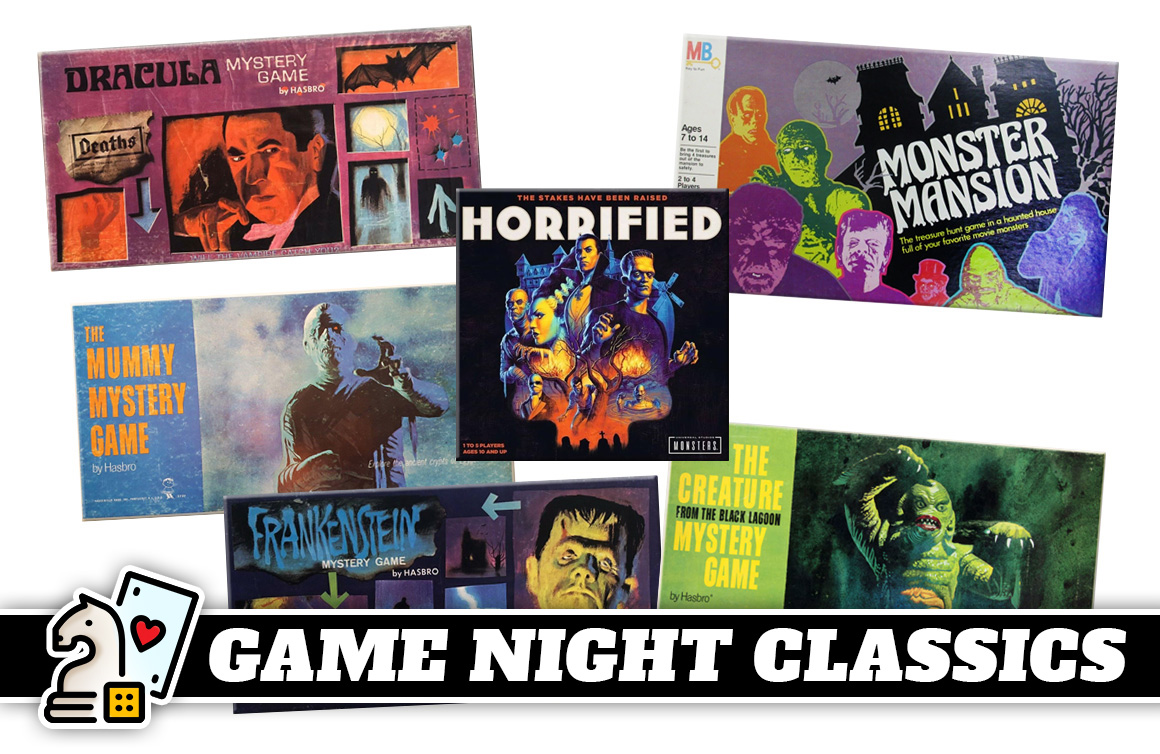
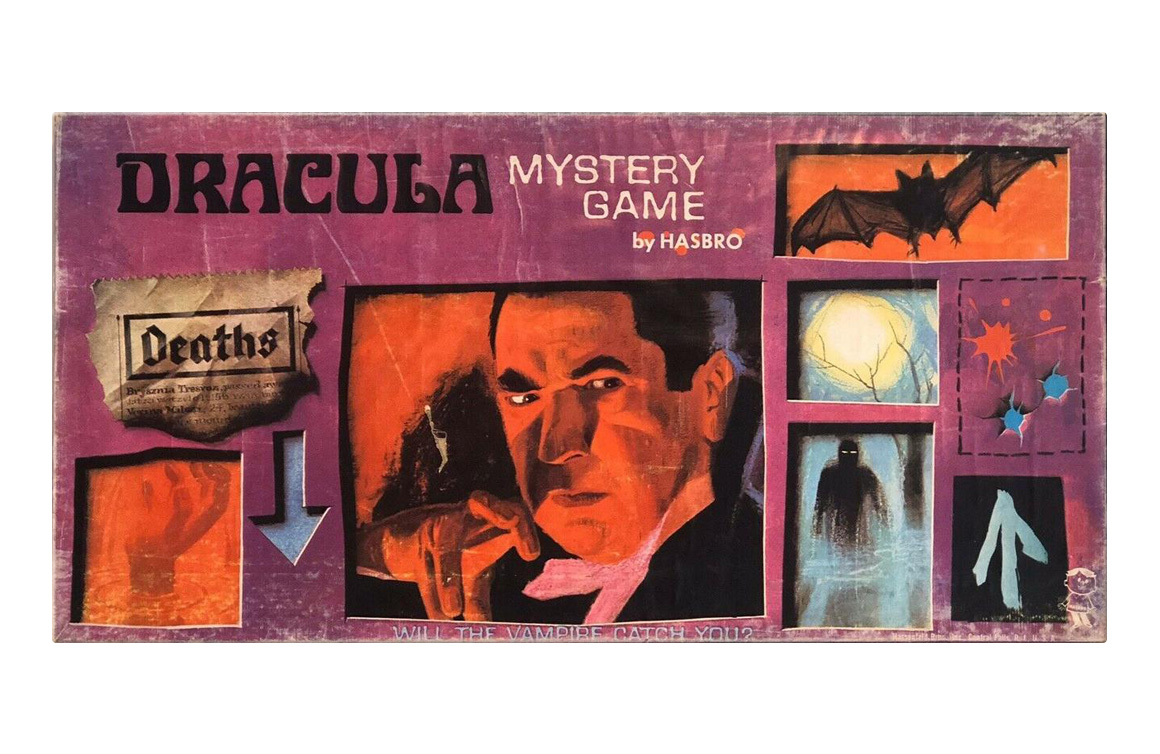
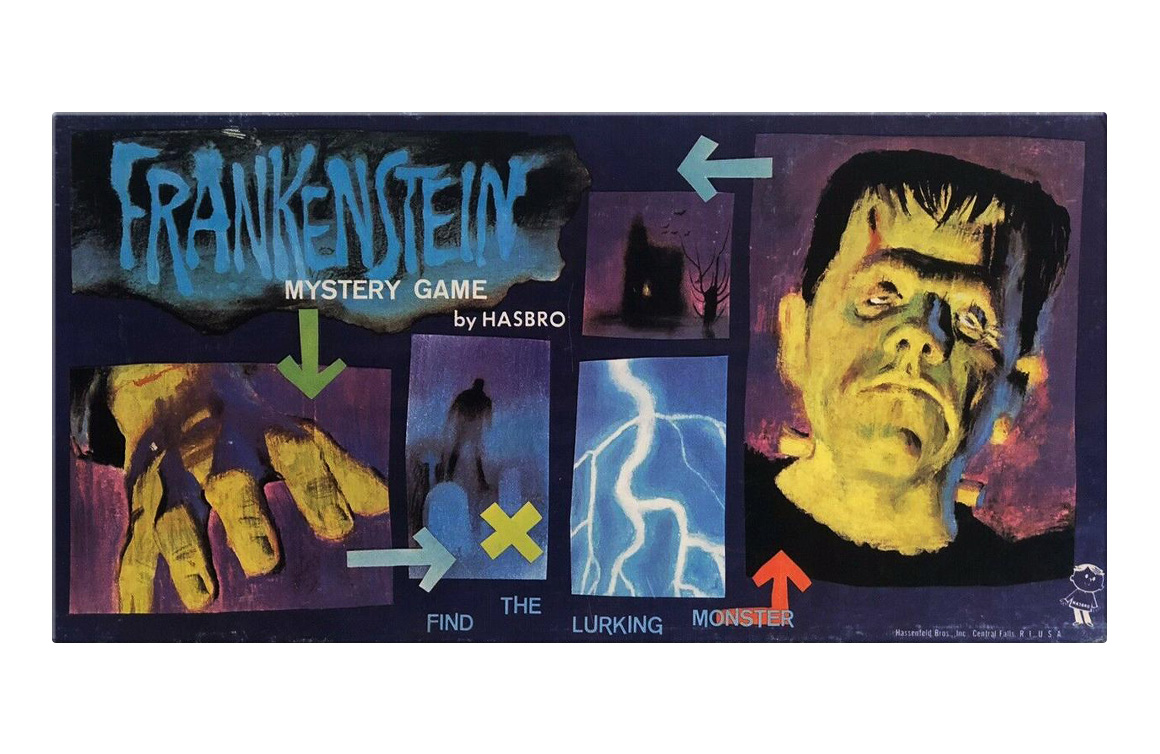
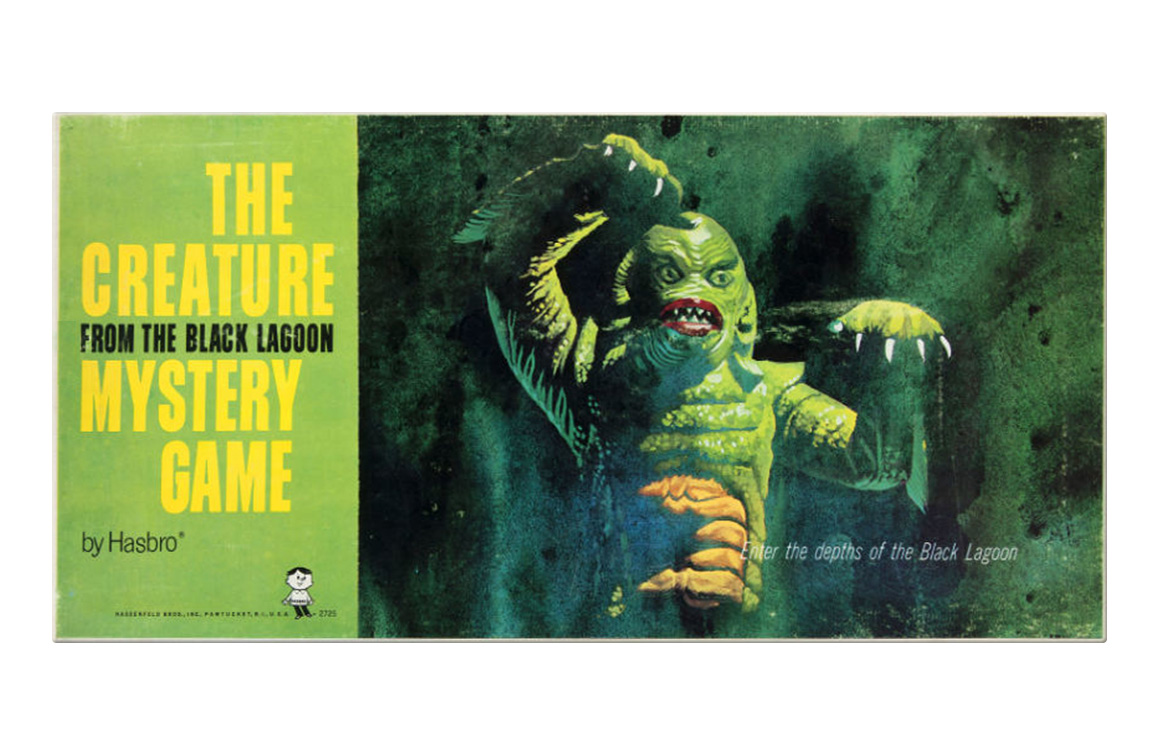
In 1963, Hasbro, then known as Hassenfeld Brothers, introduced a series of monster-themed board games based on the Universal Monsters. By this time, most of these films were regularly shown on television, so the timing seemed perfect. The games were recommended for ages ten and up, but ten-year-olds today might find the simple game mechanics boring. The Dracula Mystery Game uses two spinners to move players along the short game board path. What might be most appealing to players is the photo-style box featuring the face of the original Dracula, Bela Lugosi. The Frankenstein Mystery Game also features a likeness of Boris Karloff as the monster and an image of one of his creepy hands on the box. This game, typical of most in the series, utilizes one spinner, action cards, and a simple board path. The original actor in Universal’s The Mummy, Boris Karloff, was barely recognizable on the Mummy Mystery Game box due to the misty background and loose mummy wrappings. Players are urged to Explore the Ancient Crypts of Egypt. And yes, the game board shows many different tombs for players to wander around. As for the Creature from the Black Lagoon Mystery Game, the fishy head was frightening, but there was no recognizable film star in the costume. Like the others, the play was basic.
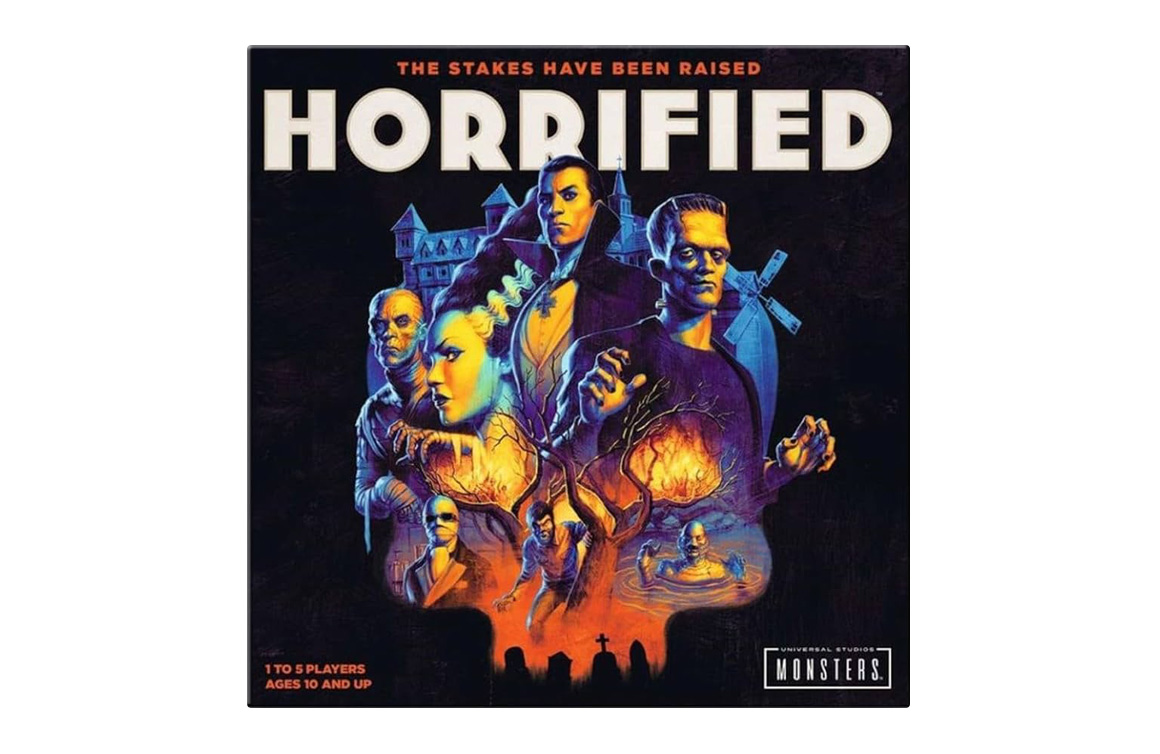
The old films continued to air frequently, and the monsters were all recognized and appreciated through the years. Rival game manufacturer Milton Bradley produced Monster Mansion in 1981, a game that highlights all the classic Universal Monsters hidden on the game board. Players seek treasure but may meet a hidden monster instead. In 2019, the German game firm Ravensburger released Horrified, the first in a series of monster-themed Euro-style games. This cooperative game focuses specifically on the Universal Monsters, while others in the series feature the lore and legends of other nations. This game is aimed at older youngsters and adults as a more complex, interactive experience with a monstrous theme.
COLLECTOR CONSIDERATIONS
One would imagine that, given the recognition and longevity of the Universal Monsters and their popularity, the original Hasbro games would be easy to find on the secondary market. However, they appear to have sold in limited numbers. Perhaps it was the simplicity of the play that kept them from selling well. If you do run across one in good condition and complete, you may have discovered a treasure. It appears those early games have become scarce collector’s items today, and some may command a monstrous sum.
