

Tabletop Games, Vintage Toys & Games
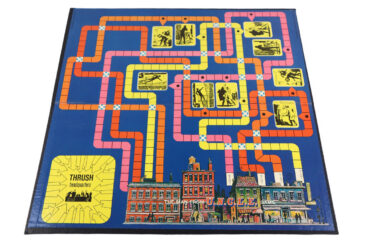
The Man from U.N.C.L.E from Ideal (1965)
Released in 1965 by Ideal, The Man from U.N.C.L.E. board game brought the mystery and intrigue of the popular television series to family game night.
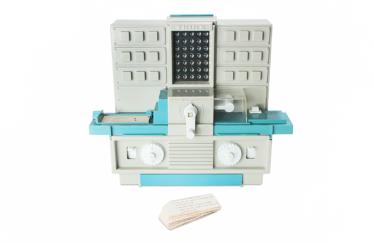
Think-a-Tron from Hasbro (1960)
Released in 1960, Hasbro’s “machine that thinks like a man” was inspired by the mammoth room-filling mainframe computers of its day.
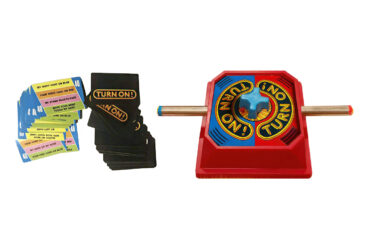
Turn On! from Kenner (1977)
Released by Kenner in 1977, Turn On! was a dexterity party game built around the human body’s ability to conduct electricity.
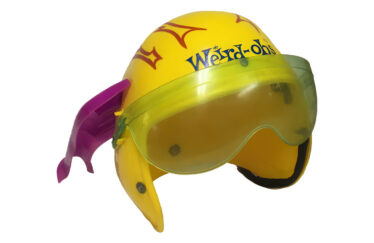
Weird-Ohs Helmet from Ideal (1964)
Released by Ideal in 1964, the Weird-Ohs Helmet was a wearable toy inspired by Hawk Model Company’s popular Weird-Ohs model kits.
Tabletop Games, Vintage Toys & Games
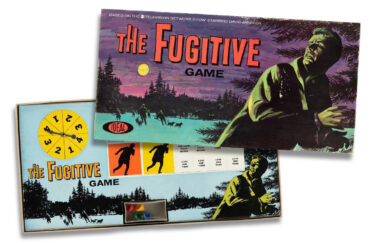
The Fugitive Game from Ideal (1964)
Released in 1964 from Ideal, The Fugitive Game brought the suspense of the popular television series to the tabletop.
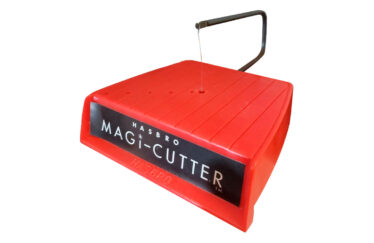
Magi-Cutter Craft Set from Hasbro (1961)
Hasbro’s Magi-Cutter Craft Sets allowed children to carve Styrofoam into one of six specified historical and modern vehicles.
Tabletop Games, Vintage Toys & Games
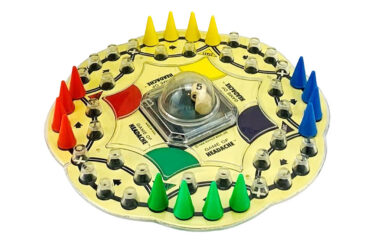
Headache from Kohner (1968)
Released by Kohner in 1968, Headache featured the company’s signature Pop-O-Matic bubble in a game that emphasized direct pursuit rather than a traditional race to the finish.
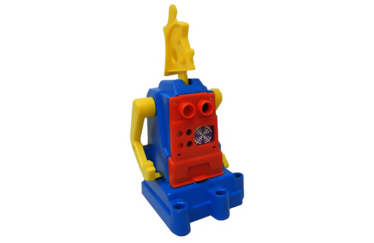
Mr. Rembrandt from Ideal (1970)
Artistry met robotics in Mr. Rembrandt from Ideal. Released in 1970, the battery-operated toy inspired by the Dutch Golden Age painter drew geometric patterns on paper.
Tabletop Games, Vintage Toys & Games
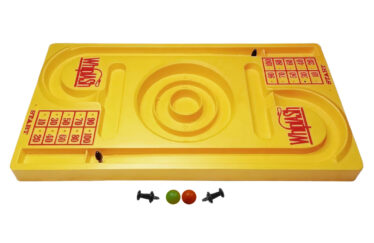
Whiplash from Lakeside (1966)
Released in 1966, Whiplash was a double-action Skee-Ball game for two players from Lakeside.
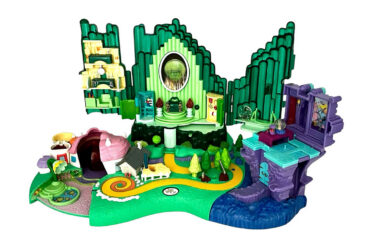
Polly Pocket The Wizard of Oz Playset from Mattel (2001)
Released by Mattel in 2001, the Polly Pocket Wizard of Oz playset reimagined the fantastical story in miniature Polly Pocket form.

Unboxed Origins: How Sequence Evolved from a Dream to a Board Game Classic
Sequence began as an idea born from a dream. Explore its inspired origins and the prototype collection now preserved at The Strong National Museum of Play.

Big Max and His Electronic Conveyor from Remco (1957)
Released by Remco in 1957, Big Max and his Electronic Conveyor used an electromagnetic robot and moving conveyor belt to introduce children to automated material handling.