 Happy National Pet Rock Day!

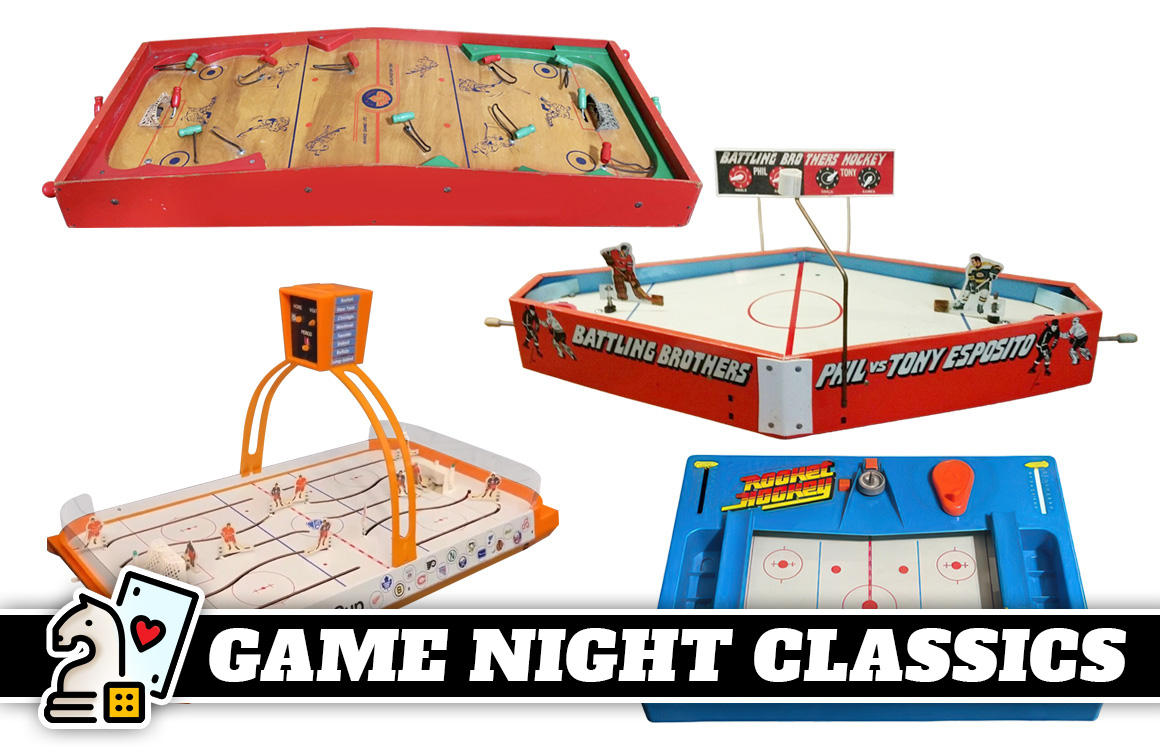
The 2026 Winter Olympics in Italy will feature 12 men’s hockey teams, including the United States and Canada, with rosters selected from the NHL. These teams did not compete in the previous two Winter Olympic tournaments. The games open on February 6, with the hockey competition starting on February 11. With renewed international attention on the sport, the event provides a timely opportunity to revisit vintage tabletop hockey simulation games.
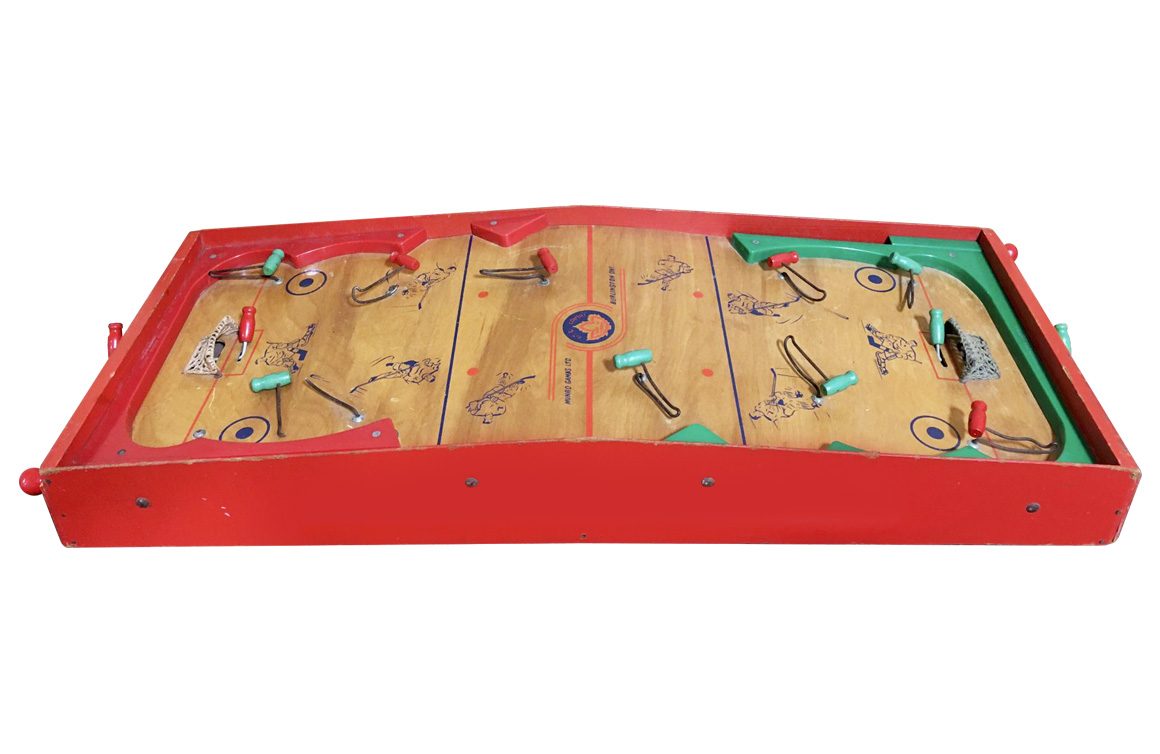
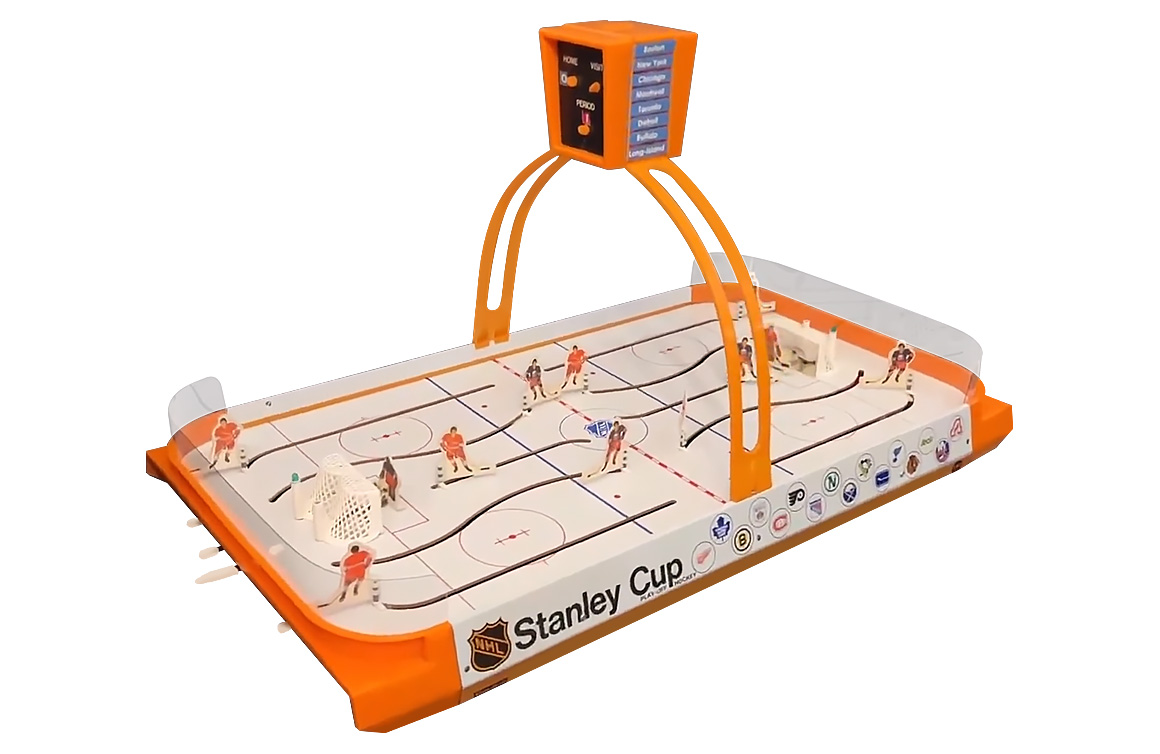
Unlike many other sports, hockey has long translated well to mechanical tabletop formats. Many early examples simulated an ice rink complete with goals and opposing teams. Players were typically represented by individual metal or plastic figures mounted on rods beneath the playing surface. Turning a rod rotated the player to pass or shoot, while pushing and pulling moved the player forward and backward. One of the earliest manufactured versions for home use appeared in Canada in 1932 with Munro Games’ handmade version of table hockey, also known as rod hockey. Both terms later became generic descriptors for this style of hockey simulation.
Munro Games was later acquired by Coleco, which established Coleco of Canada and also operated under the Eagle Games name. Since the 1930s, numerous manufacturers have produced tabletop hockey games, and they continue to be made today. Well-known contemporary examples include those produced by Stiga in Sweden. Commercial arcade versions, including plastic-domed “bubble” hockey games and air hockey tables, are also widely found in today’s game arcades.
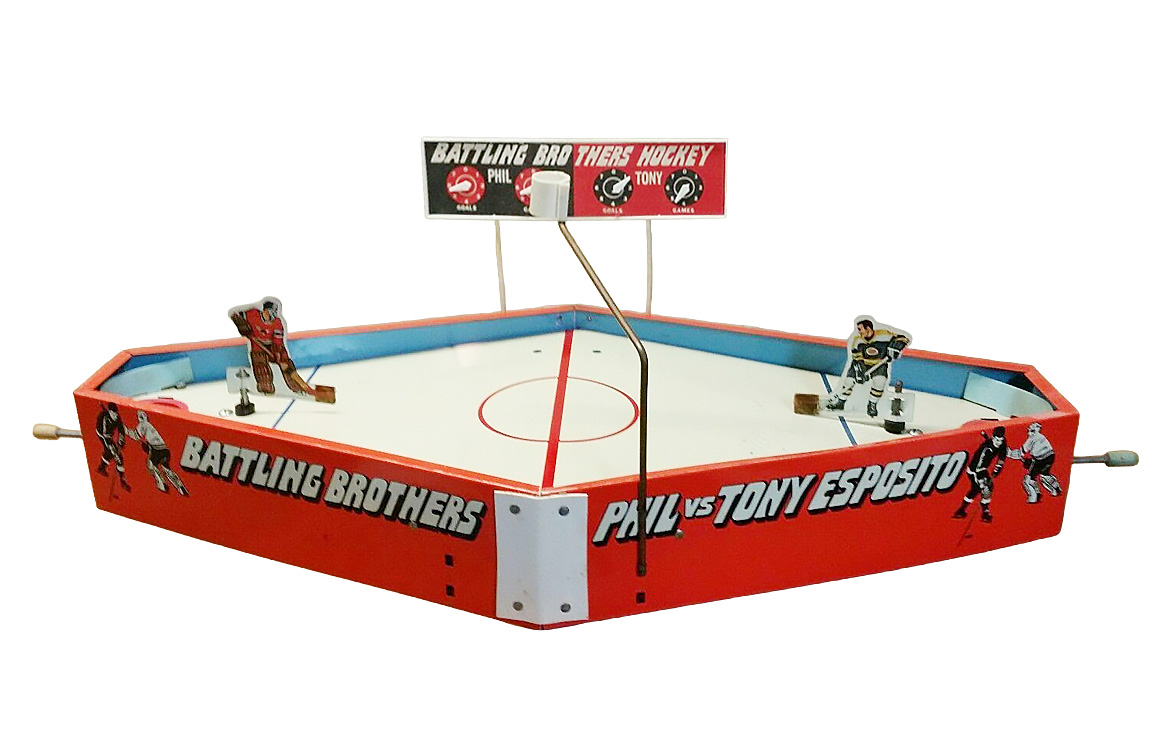
In 1970, the Gotham Pressed Steel Corporation of New York released a simplified version of rod hockey, featuring only two opposing players. The company later secured the endorsements from brothers Phil and Tony Esposito, Canadian-American professional hockey players with strong name recognition at the time. The Battling Brothers Hockey game featured a photo of the Espositos playing the game on its box cover, and the flat metal player pieces bore their likenesses.
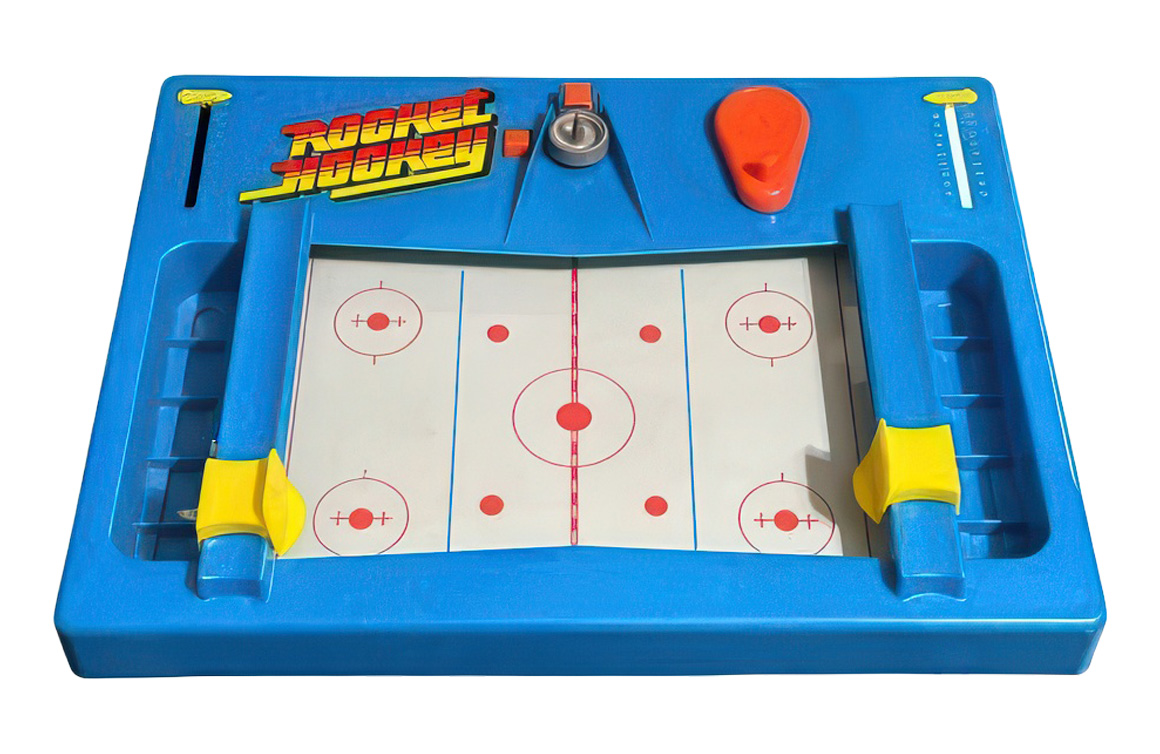
In 1978, Mattel introduced Rocket Hockey, a compact plastic tabletop game with a small rink and opposing goals. Each player controlled a sliding block used to block or shoot a metal puck with a quick forward motion. The game resembled a miniature air hockey table or even a simplified game of Pong. In the 1980s, Mattel secured the endorsement and a cover image of Wayne Gretzky, then the best-known hockey player (and later coach) of his era. Gretzky’s endorsement undoubtedly helped with sales of this simple hockey table game.
The National Hockey League name has appeared across many types of hockey-related games. In addition to trading cards, which have often been adapted for tabletop hockey simulations, the league has licensed trivia games and construction-based playsets, including a LEGO hockey rink with players and accessories. While modern video games now offer highly detailed digital simulations, tabletop hockey games remain an enduring expression of the sport’s appeal.
As a Winter Olympics year, 2026 may once again draw attention to hockey-themed play, including the mechanical tabletop games that have simulated the sport for nearly a century.
