
As I approach my 45th year of collecting records, Toy Tales invited me to share some of the practices that have helped preserve my collection. These aren’t the only ways to care for vinyl, but they’ve served me well through decades of thrift-store finds, online purchases, and countless hours of listening.
Collecting records is part passion and part preservation. Caring for a collection isn’t about perfection; it’s about small, consistent habits that help keep the music and the memories alive. Whether you’re just beginning your vinyl journey or have been collecting for years, I hope these tips prove useful.
CLEANING THE VINYL
Dust has a way of finding its way into everything, and records are no exception. While cleaning a record can feel like a chore, it’s one of the simplest ways to extend the life of your collection. Even brand-new records can benefit from a quick clean before their first spin.
Here are a few approaches that have served me well over the years:
- Using a carbon fibre brush: A quick sweep before and after each play removes surface dust and reduces static. It’s a small habit that makes a big difference.
- Consider a record-cleaning machine: Devices such as the Spin-Clean or ultrasonic cleaners can remove deeper grime, fingerprints, and residue from older or heavily played records. They’re especially useful for thrift-store finds or inherited collections.
- My personal approach: For routine maintenance, I often use a soft paper towel lightly dampened with distilled water. It’s inexpensive, gentle, and surprisingly effective. Just remember to wipe along the grooves, never across them.
CHOOSING THE RIGHT SLEEVES
Collectors have their own preferences for protective sleeves, but I can share what has consistently worked for me.
For my collection, I order resealable outer sleeves for 7-inch, 10-inch, and LPs from Bags Unlimited, though many archival suppliers offer comparable products. For box sets, I also use fitted protectors that help prevent shelf wear and scuffing.
When selecting sleeves, pay attention to the material. Polypropylene sleeves are crystal clear and resist wrinkling over time, making them an excellent choice for displaying cover artwork. Polyethylene sleeves are softer and slightly cloudier, but they’re also widely used by collectors. Both materials are considered archival-safe when purchased from reputable manufacturers, so the choice often comes down to personal preference.
Whatever you choose, a properly fitted sleeve goes a long way toward protecting jackets from dust, shelf wear, and everyday handling.
PROPER STORAGE
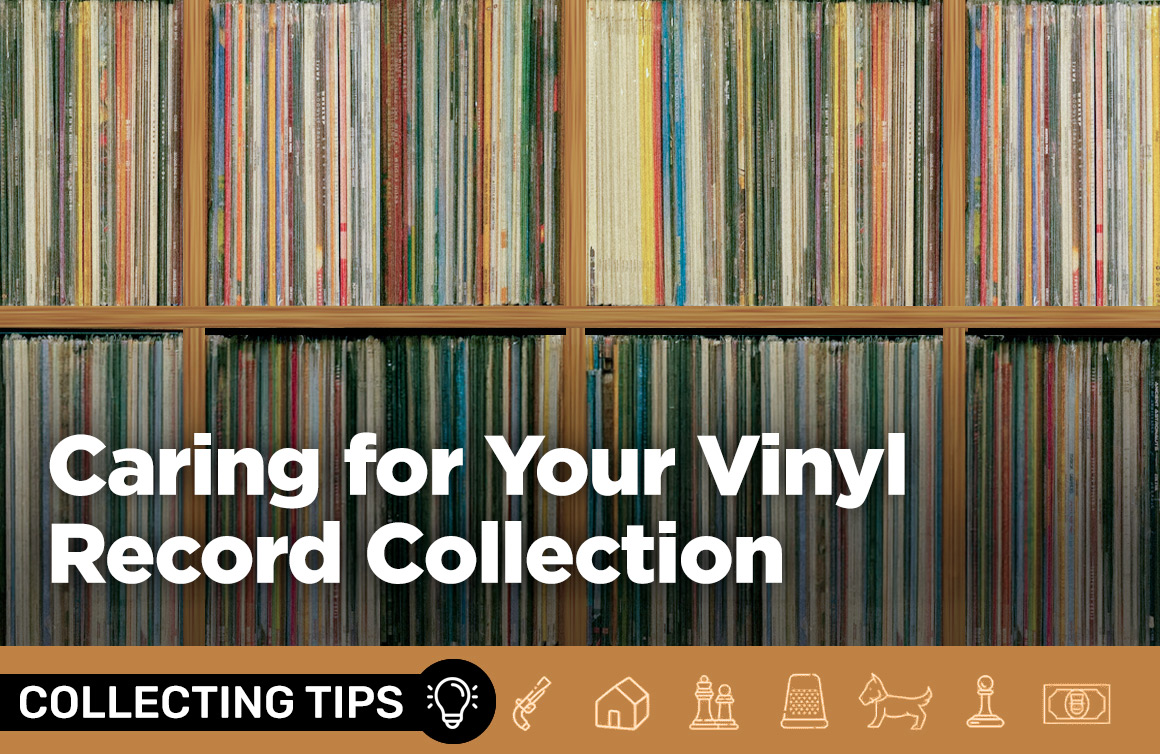
Early in my collecting years, every record I owned sat on the floor in neat little rows that were easy to flip through. While convenient, it wasn’t the best way to preserve a growing collection. Investing in proper shelving turned out to be one of the best decisions I ever made.
Some collectors swear by IKEA’s Kallax shelves, while others prefer cabinets that let you browse records the way you would in a record shop. Personally, I love that style, although space doesn’t always make it practical.
The shelving I ultimately chose is from Mapleshade Modular Furniture, and it has served me exceptionally well because:
- It’s sturdy enough to support the weight of a growing collection.
- It comfortably accommodates 7-inch 45s, LPs, and even 78s.
- It keeps everything organized, accessible, and well supported.
Good shelving isn’t just about appearance. It provides a stable home for your records and helps ensure they’ll continue spinning for decades to come.
EQUIPMENT AND TURNTABLES
I’ve always believed that quality records deserve quality playback equipment. And for anyone wondering whether turntables are still around, the answer is a resounding yes. In fact, vinyl has enjoyed an incredible resurgence over the past decade.
Over the years, I’ve used everything from simple portable players to traditional stereo systems. Today, my primary turntable is an Audio-Technica AT-LP120, paired with a vintage Realistic receiver and Yamaha bookshelf speakers. Together they provide a warm, balanced sound that’s equally at home with children’s read-alongs and full orchestral recordings.
Many collectors begin with an entry-level player, and there’s absolutely nothing wrong with that. They’re affordable, accessible, and most importantly, they get people listening. As your collection grows, however, you may decide to upgrade to a turntable with adjustable tracking force, a higher-quality cartridge, and a more stable platter. It’s less about chasing expensive equipment and more about giving your records the gentlest possible playback.
If you’re assembling a system on a budget, don’t overlook thrift stores, estate sales, or local music shops. You’d be surprised how often a little patience uncovers excellent equipment at a fraction of its original cost.
Good equipment doesn’t have to be expensive. It simply needs to treat your records well.
QUALITY RECORDS
When it comes to collecting, the condition of the records themselves is just as important as the equipment used to play them.
When I first began collecting, I was searching for records illustrated by a particular artist. That simple goal led me to discover new labels, performers, and stories, and before long, my collection had expanded far beyond its original purpose.
In the late 1990s, eBay introduced me to another aspect of collecting: finding vintage records that were still sealed. While sealed doesn’t always guarantee perfection, it often provides an opportunity to own copies that have seen little or no use. Those purchases helped shape the collection I enjoy today.
If you’re just beginning your vinyl journey, there is no single “right” way to collect. Whether you’re drawn to children’s read-alongs, jazz, rock, classical music, or spoken word recordings, focus on finding the best condition you can reasonably afford.
A few things to keep in mind:
- Pops and clicks happen: Even well-preserved records can have a little surface noise. It’s part of the charm for some listeners.
- Skips can occur: Before giving up on a record, try cleaning it and checking your tonearm settings.
- Condition matters: Look for clean grooves, intact labels, and jackets without moisture damage.
- Trust your ears: If it sounds good to you, that’s what matters most.
Some collectors chase sealed copies, others enjoy rescuing well-loved thrift-store finds, and many hunt for rare pressings. There isn’t a wrong approach. The joy comes from discovering the music, artwork, and history that speak to you.
FINAL THOUGHTS
And there you have it. There are certainly many more corners of the vinyl-collecting world to explore; still, I hope these points offer a solid foundation, whether you’re just beginning your journey or looking to maintain the equipment, shelves, sleeves, and records you have.
Thank you for reading, and for sharing in the love of this remarkable and timeless medium. Now get out there and start experiencing the joy, one record, one track, and one spin at a time!
