 Game on! It’s National Game & Puzzle Week!

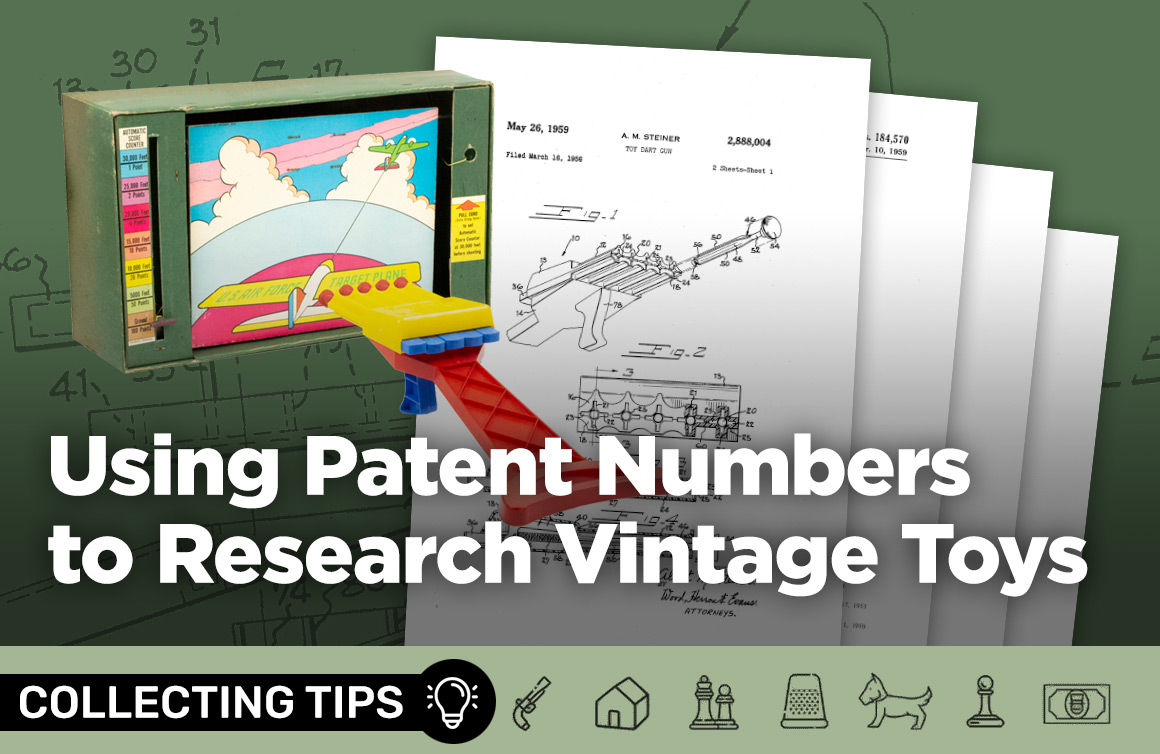
Patent numbers found on vintage toys, packaging, and instructions can provide valuable clues about their origins. Searching these numbers can reveal information about a toy’s inventor, design, manufacturer, and development history. While patent records don’t necessarily establish when a toy was produced, they can be a useful starting point for collectors looking to learn more about the items in their collections.
1. LOOK FOR PATENT MARKINGS
Examine the bottom, back, interior, battery compartment, and mechanical components of a toy or game. Packaging and instructions may also contain patent information.
2. SEARCH THE NUMBER
If you locate a patent number, enter it into an online patent database. For most American and Canadian toys, the U.S. Patent and Trademark Office and Google Patents can be useful starting points.
3. CHECK THE PEOPLE AND COMPANIES
Look beyond patent dates. Credited inventors, applicants, and assignees can clue you into who developed or manufactured the toy.
4. STUDY ANY AVAILABLE DRAWINGS
Patent illustrations can often be used to help with an identification by showing unique mechanisms, shapes, components, or features that correspond to the toy you’re researching.
5. BE SURE NOT TO CONFUSE PATENT DATES WITH MANUFACTURING DATES
Use the patent as one piece of evidence. Confirm the toy’s actual production period using catalogues, advertisements, or trade publications.