 Happy National Mad Hatter Day!

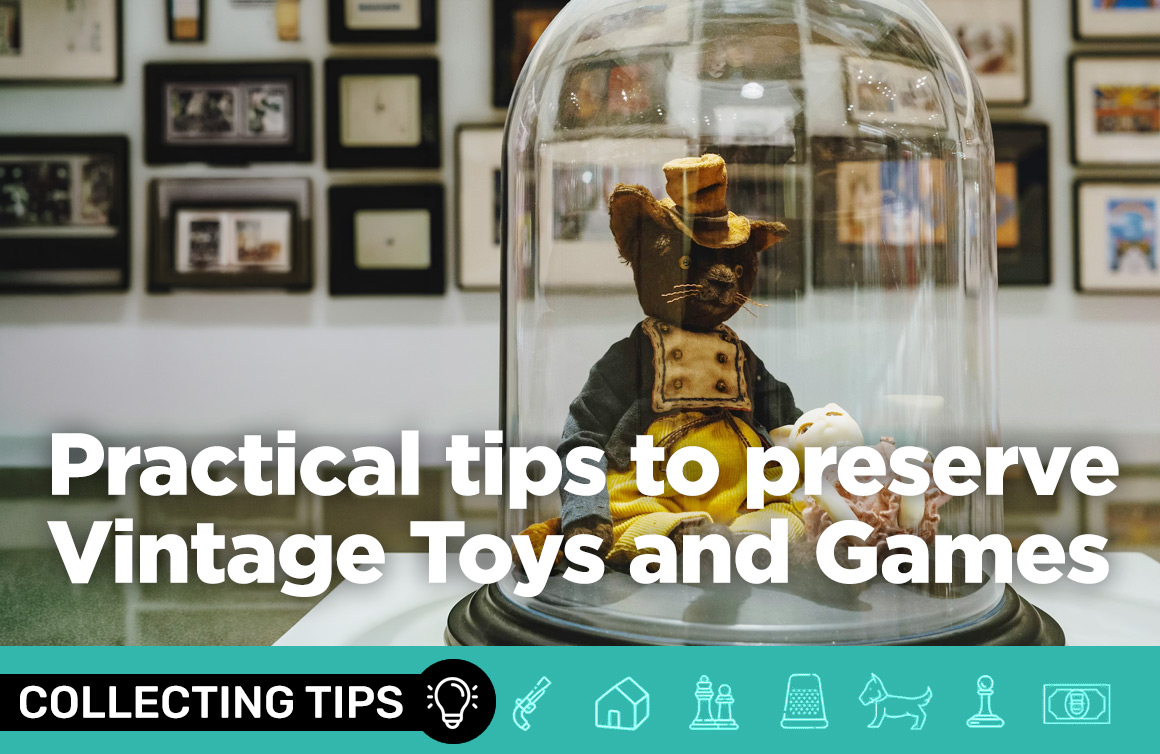
Whether you collect board games, action figures, or well-played favourites from your childhood, proper care makes a measurable difference in how vintage toys age. Preservation does not require museum storage or expensive equipment, but it does require consistency and restraint.
Here are some practical tips to help preserve your vintage toys and games:

Control light exposure
Light, especially sunlight, is one of the fastest ways to damage vintage toys.
Why it matters:
UV exposure fades boxes, yellows plastics, and weakens paper and adhesives.
Practical tips:
- Store toys away from windows and skylights
- Avoid prolonged display in direct or reflected sunlight
- Use LED lighting for displays, which emits less heat and UV

Maintain stable temperature and humidity
Environmental stability matters more than hitting an ideal number.
Why it matters:
Fluctuations cause warping, cracking, mould growth, and adhesive failure.
- Best practices:
- Aim for a moderate room temperature
- Avoid basements, attics, garages, and sheds
- Use a dehumidifier in damp spaces
- Avoid plastic storage in areas prone to condensation

Handle boxes and paper with care
Boxes, inserts, and rule sheets often determine value.
Why it matters:
Paper degrades faster than plastic and is harder to replace authentically.
Practical Tips:
- Remove contents carefully before opening boxes fully
- Avoid stacking heavy items on top of boxed games
- Store flat inserts and manuals inside the box, not loose
- Use acid-free backing boards for loose paperwork

Use archival-safe storage materials
Not all plastic is safe for long-term storage.
Why it matters:
Some plastics can off-gas, accelerating yellowing or stickiness.
What to use:
- Acid-free boxes and sleeves
- Polypropylene or polyethylene bags
- Avoid PVC, vinyl, and rubber bands
- Replace old tape and elastic bands that can stain or snap

Exercise battery safety
Batteries are one of the biggest hidden risks to electronic toys.
Why it matters:
Leaking batteries permanently damage contacts and plastic housings.
Practical tips:
- Always remove batteries before storage
- Check battery compartments periodically
- Clean light corrosion early using appropriate methods
- Store electronics without batteries installed

Clean infrequently
Over-cleaning causes more harm than light wear.
Why it matters:
Original finishes, decals, and paint are fragile.
Best practices:
- Use a soft, dry cloth for dusting
- Avoid water on paper, decals, or labels
- Never use any household cleaners
- Test any cleaning method on an inconspicuous area first

Be careful with sealing and display cases
Display case protection can create problems if done incorrectly.
Why it matters:
Sealed environments can trap moisture, accelerating damage.
Considerations:
- Allow airflow when possible
- Avoid airtight containers for paper items
- Monitor enclosed displays for condensation and/or odour

Store loose parts properly
Small parts are often the first to be lost or damaged.
Why it matters:
Completeness significantly affects value and collectability.
Practical tips:
- Use small, labelled archival bags
- Keep parts with their original set
- Avoid mixing similar pieces from different toys or games

Resist “improvement”
Preservation requires restraint.
Why it matters:
Repainting, re-gluing, or making other “fixes” can lower value and collectability.
Best practices:
- Stabilize rather than restore
- Document any preservation updates
- When in doubt, do nothing
