
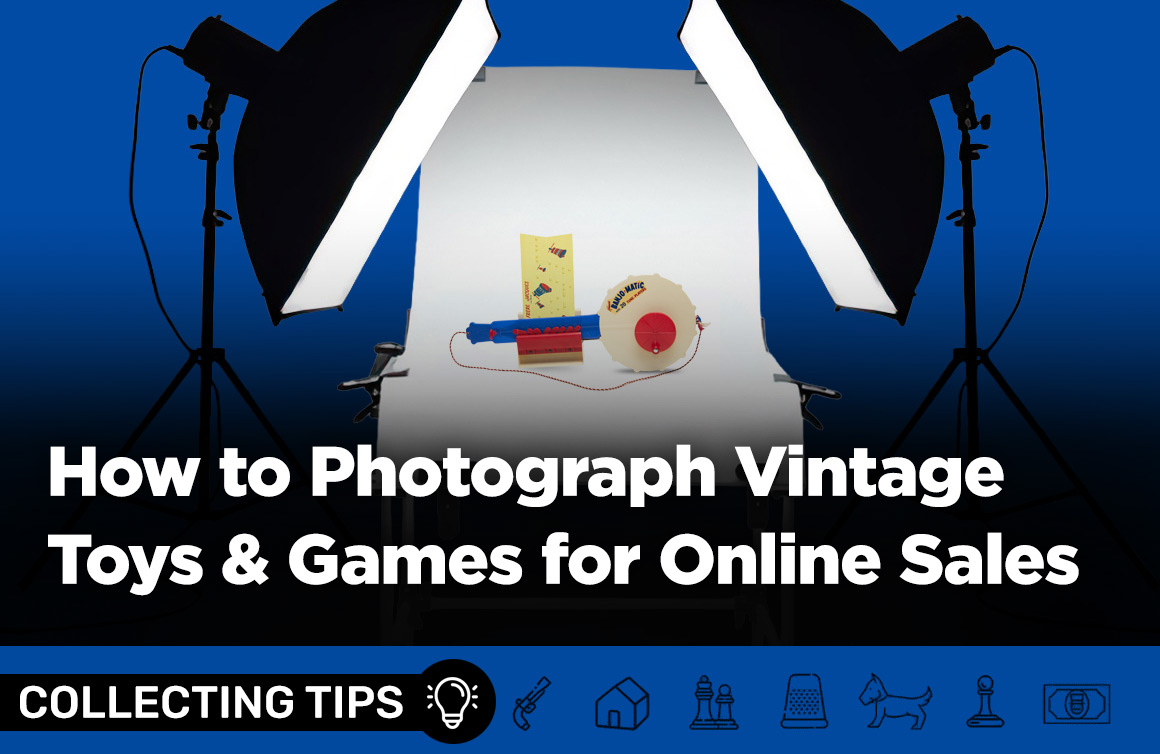
A great online listing starts with great photos. Whether you’re selling a boxed board game, an action figure, or a battery-operated toy, clear, honest photographs help buyers understand exactly what they’re getting and help answer questions before they’re asked. Good photos can even help your item sell faster!
1. Use Good Lighting
Lighting can make the difference between an average listing and a great one. Natural, indirect light produces the most accurate colours and reveals details without harsh shadows or glare. If you’re photographing indoors, use two light sources instead of a camera flash whenever possible.
2. Keep the Background Simple
Your toy or game should be the centre of attention. A plain white, grey, or black background helps buyers focus on the item instead of what’s behind it. A clean, consistent background also gives your listings a more professional appearance.
3. Photograph Every Angle
Don’t make buyers guess what they’re purchasing. Show the front, back, sides, top, and bottom, along with close-ups of labels, copyright information, and manufacturer markings. If the original box is included, photograph it just as thoroughly.
4. Show the Good and the Bad
Collectors appreciate honesty. Highlight accessories, inserts, and original paperwork, and photograph any scratches, cracks, worn corners, missing pieces, or other flaws. Clear documentation builds trust and reduces surprises after the sale.
5. Demonstrate It Works
If you’re selling an electronic toy, train, talking doll, or battery-operated game, include photos showing it operating whenever possible. If you haven’t tested it, say so clearly rather than leaving buyers to wonder.
6. Edit for Accuracy, Not Perfection
Simple adjustments to brightness or exposure of your photos are fine, but avoid edits that change the item’s appearance. The goal is to represent the toy as accurately as possible, so buyers receive exactly what they expected.